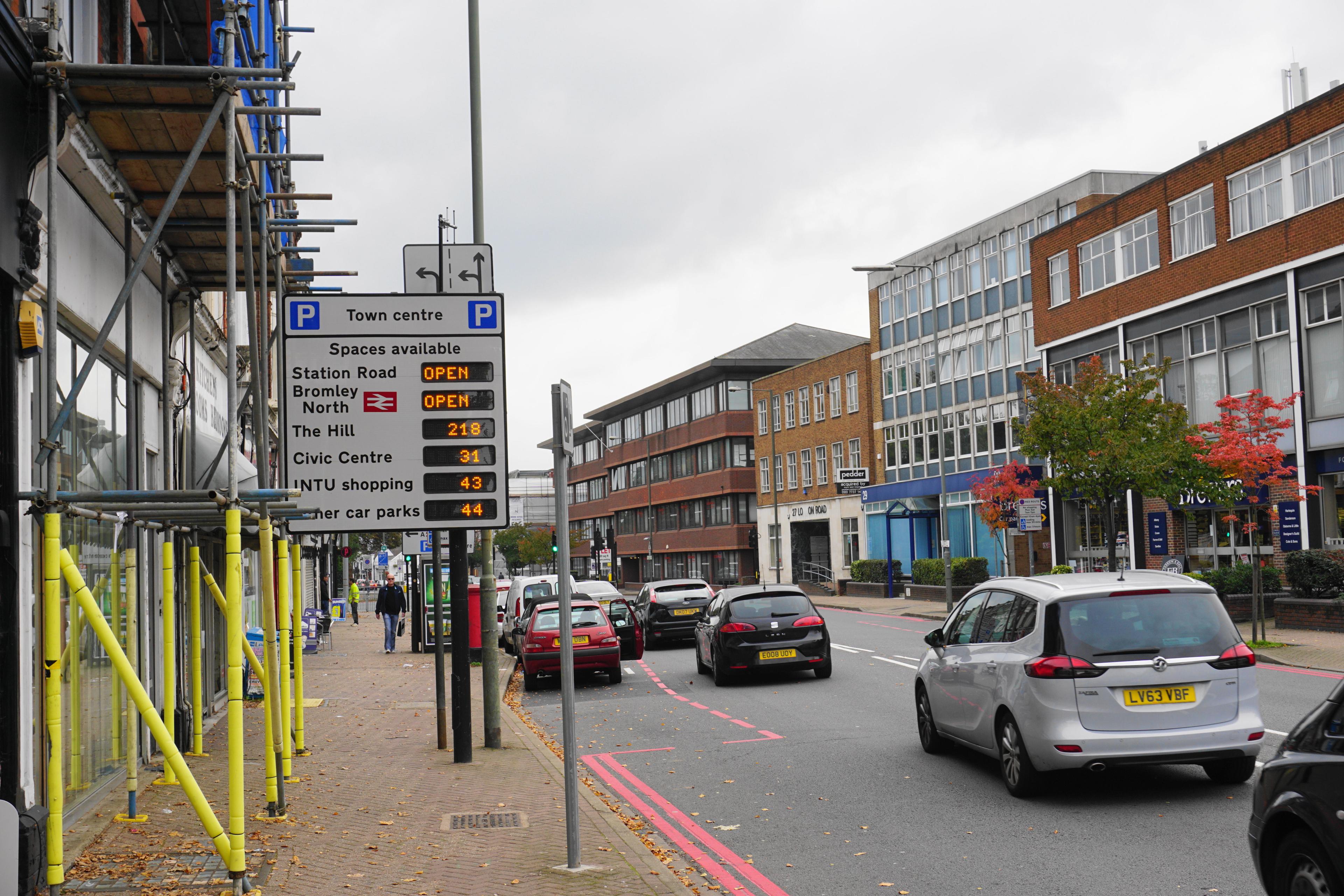
Bridging Finance in Bromley
Fast short-term property finance with completion in as little as 5 working days. Rates from 0.55% per month, up to 75% LTV.
What Is Bridging Finance?
Bridging finance is a short-term secured loan designed to provide rapid access to capital when speed is critical. Unlike traditional mortgages that can take weeks or months to arrange, bridging loans can complete in as little as 5 working days, making them the preferred funding solution for time-sensitive property transactions across Bromley and the wider South East.
The term “bridging” reflects the loan’s core purpose: it bridges a temporary funding gap until a longer-term finance solution is put in place. Whether you are purchasing at auction with a 28-day deadline, breaking a property chain to secure your next home, or acquiring an investment property that needs refurbishment before it qualifies for a standard mortgage, bridging finance provides the flexibility and speed that conventional lenders simply cannot match.
For Bromley property developers and investors, bridging finance plays a distinct role compared to development finance. While development finance is structured for major construction projects with staged drawdowns monitored by a Quantity Surveyor, bridging finance is typically advanced as a single lump sum for acquisitions, light refurbishments, or transitional situations. The two products often complement each other: a developer might use a bridging loan to acquire a site quickly, then transition to development finance once planning permission is secured and construction begins.
As specialist bridging finance brokers operating across Bromley, we have access to over 100 bridging lenders, from high-street banks with bridging arms to specialist short-term lenders and private credit funds. This breadth of panel means we can source competitive terms for straightforward transactions and creative solutions for complex or unusual situations. Whether your requirement is a simple residential bridge at 65% LTV or a multi-million pound commercial facility with a layered exit strategy, we have the lender relationships and market knowledge to deliver.
When to Use Bridging Finance
Bridging finance is a versatile funding tool with applications across a wide range of property scenarios. Here are the most common situations where Bromley developers and investors turn to bridging.
Auction Purchases
Meet the strict 28-day completion deadline required by auction houses. Bridging finance is the go-to funding solution for auction buyers, providing the speed and certainty needed to complete on time. We regularly arrange bridging facilities for Bromley auction purchases within 7-10 working days, well within the standard completion window.
Chain Breaks
When a property chain collapses and you risk losing your purchase, a bridging loan provides the funds to complete immediately while your existing property sale catches up. This is particularly common in Bromley where family homes in areas like Chislehurst and Bickley attract high demand and competitive bidding.
Refurbishment Projects
Light-to-medium refurbishment projects that do not require planning permission or structural works are ideal for bridging finance. Purchase a property below market value, complete the refurbishment within 6-12 months, then refinance onto a standard buy-to-let mortgage or sell at the improved value.
Planning Gain
A popular strategy among Bromley developers: acquire a property with a bridging loan, secure planning permission to add value, then either sell with the benefit of planning or refinance into development finance to build out. This approach works well for sites with potential for extensions, loft conversions, or change of use.
Unmortgageable Properties
Properties that high-street lenders will not touch, such as those with short leases, structural issues, no kitchen or bathroom, or non-standard construction, can often be funded with bridging finance. Once the issues are resolved, you refinance onto a conventional mortgage at a significantly higher valuation.
Development Exit Bridging
If your development finance term is expiring but units remain unsold, a development exit bridge provides breathing room. These facilities are typically cheaper than extending your development loan and give you 6-18 months to sell remaining units at full market value rather than accepting fire-sale prices.
Key Parameters
Our bridging finance facilities are tailored to each transaction, but here are the headline parameters available through our lender panel.
Loan-to-Value
Up to 75%
Based on open market value or purchase price
Interest Rates
From 0.55% pm
Monthly interest, rolled up or serviced
Loan Term
1-24 months
Flexible terms with no early repayment charges
Completion Speed
5-10 working days
From application to funds in your account
Facility Size
£100K - £25M
Individual and portfolio bridging facilities
Arrangement Fee
1-2%
Deducted from advance or added to loan
Regulated vs Unregulated Bridging
Not all bridging loans are created equal. Understanding the distinction between regulated and unregulated bridging is essential for choosing the right product and ensuring appropriate consumer protections are in place.
Regulated Bridging
A regulated bridging loan is any loan secured against a property that you or a close family member will occupy as your primary residence. These loans fall under the oversight of the Financial Conduct Authority (FCA), which means lenders must adhere to strict conduct rules, provide clear documentation, and ensure the loan is suitable for your circumstances.
Common scenarios:
- Purchasing a new home before your current one sells
- Breaking a chain to secure your dream property
- Short-term finance while awaiting a residential mortgage offer
- Refurbishing your main residence before remortgaging
Key protection: Regulated bridging includes a mandatory 14-day reflection period and access to the Financial Ombudsman Service if things go wrong.
We are not FCA-authorised. For regulated bridging cases, we introduce you to an FCA-authorised partner firm who carries out the regulated activity and any required advice.
Unregulated Bridging
Unregulated bridging loans apply to all other property transactions, specifically those involving investment properties, commercial premises, land, or development sites where you will not be residing. The majority of bridging loans arranged for Bromley property developers and investors fall into this category.
Common scenarios:
- Acquiring buy-to-let investment properties
- Purchasing commercial or mixed-use buildings
- Funding land acquisitions for development
- Financing auction purchases of investment stock
Key advantage: Unregulated bridging typically completes faster as there is no mandatory reflection period, and lenders have greater flexibility on criteria.
Not sure which type applies to your situation? Our team can advise on the correct product type and ensure you receive the appropriate level of protection. Speak to an adviser to discuss your requirements.
Exit Strategy: The Most Important Factor
Every bridging lender will ask the same question: how will you repay the loan? Your exit strategy is the single most important factor in securing bridging finance, and a clear, credible exit plan will unlock the best rates and terms.
Sale of Property
The most straightforward exit: you sell the property (either the bridged property itself or another asset) and use the proceeds to repay the bridging loan. This exit is strongest when supported by comparable evidence, such as recent sales of similar properties in the same Bromley postcode.
For refurbishment projects, lenders will want to see your projected end value supported by agent appraisals or comparable evidence. If you are selling an existing property to repay the bridge, evidence that it is already on the market will strengthen your application considerably.
Refinance to Mortgage
A refinance exit involves replacing the bridging loan with a long-term mortgage, typically a residential mortgage or buy-to-let product. This is the most common exit for chain break bridges and refurbishment projects where the property will be held as an investment.
To strengthen a refinance exit, having a Decision in Principle (DIP) from a mortgage lender before you take the bridge demonstrates to the bridging lender that refinance is achievable. We can help arrange both the bridge and the long-term refinance simultaneously.
Refinance to Development Finance
For developers using bridging to acquire a site before starting a larger project, the exit is to refinance into a development finance facility once planning is granted. The development loan repays the bridge and provides additional funds for the build.
This strategy is increasingly popular in Bromley, where securing sites quickly is essential in a competitive market. We can structure the bridge and development facility together from the outset, ensuring a seamless transition between the two.
A word of caution on exit strategies
Never take out a bridging loan without a clear, realistic exit plan. Bridging loans that overrun their term can incur significant penalty interest and additional fees. If your primary exit fails, you should always have a secondary or fallback exit. We stress-test every exit strategy before recommending a facility to ensure our clients are protected.
Bridging Finance for Bromley Developers
Bromley is one of London’s most active property markets, with strong demand for both residential and commercial property across the borough. From the Victorian terraces of Beckenham to the detached family homes of Chislehurst, the diverse property stock creates numerous opportunities for developers and investors who can move quickly.
Bridging finance is a critical tool in the Bromley developer’s toolkit. The borough’s proximity to Central London, excellent transport links, and strong school catchment areas drive consistent buyer demand, which in turn supports robust exit strategies for bridging loans. Properties in areas such as Bromley Town Centre, Orpington, and Penge attract strong interest from both owner-occupiers and buy-to-let investors, ensuring that well-priced properties sell within reasonable timeframes.
We see several common bridging strategies working particularly well in Bromley. Permitted development conversions of commercial space above shops in Bromley High Street and Beckenham High Street are frequently funded with bridging loans, as developers acquire the building quickly and then either convert under PD rights or apply for full planning. Similarly, the growing demand for HMOs and co-living spaces in areas close to Bromley South station has driven a wave of refurbishment-focused bridging transactions.
For larger schemes that require both acquisition speed and subsequent construction funding, we regularly structure bridge-to-development finance packages. This involves arranging the bridging loan for the initial acquisition alongside indicative terms for the development finance facility, giving you certainty on the full funding journey from day one. Combined with mezzanine finance where additional leverage is needed, this approach allows Bromley developers to compete effectively for sites without tying up excessive amounts of their own capital.
Bromley Borough Coverage
All postcodes: BR1-BR7, SE6, SE19, SE20, SE25, SE26
Local Market Knowledge
Deep understanding of Bromley property values and demand
Rapid Local Valuations
Surveyors familiar with Bromley for faster turnaround
Bridging Finance FAQs
Find answers to the most common questions about bridging finance for Bromley property projects.
We can arrange bridging finance completion in as little as 5 working days from application, though 7-10 working days is more typical. The speed depends on factors such as the complexity of the transaction, how quickly the valuation can be arranged, and the responsiveness of solicitors. For auction purchases where time is critical, we prioritise your application and work with lenders who have streamlined processes to meet tight deadlines.
Bridging finance is a short-term loan (typically 1-24 months) designed to "bridge" a gap in funding until a longer-term solution is in place. Unlike a mortgage, bridging loans are arranged much faster, are based primarily on the property value and exit strategy rather than income affordability, and carry higher monthly interest rates. A mortgage is a long-term product (typically 25-35 years) with lower rates but a much longer application process. Bridging is used when speed is essential or when the property does not yet qualify for a standard mortgage.
Most bridging lenders offer up to 75% loan-to-value (LTV) on standard residential and commercial properties. Some specialist lenders will go up to 80% LTV for strong applications with a clear exit strategy. If you need higher leverage, we can explore second-charge bridging or combine bridging with mezzanine finance to achieve up to 85-90% of the property value, though rates will be higher on the additional borrowing.
Not necessarily. Bridging loans offer three interest payment options: rolled up (interest is added to the loan and paid at the end along with the capital), retained (interest for the full term is deducted from the advance at the start), or serviced (you make monthly interest payments). Rolled-up interest is the most common choice as it minimises your cash outlay during the loan term, though retained interest gives you certainty on total costs from day one.
Yes, bridging finance can be secured on properties regardless of planning status. In fact, many borrowers use bridging specifically to acquire sites before submitting planning applications. The loan is secured against the current market value of the property, and lenders are primarily concerned with your exit strategy. If your plan is to gain planning permission and then sell or refinance, this is a well-understood and commonly accepted approach among specialist bridging lenders.
The most common accepted exit strategies are: sale of the property (either as-is or after refurbishment), refinance onto a residential or buy-to-let mortgage, refinance into development finance for a larger build project, or sale of another property you own. The key requirement is that your exit strategy must be realistic, achievable within the loan term, and clearly evidenced. We help you present the strongest possible exit case to lenders.
Bridging finance can be either regulated or unregulated. Regulated bridging loans are those secured against a property that you or a close family member will live in as your main residence. These are regulated by the Financial Conduct Authority (FCA) and come with additional consumer protections. We are not FCA-authorised, so for regulated cases we introduce you to an FCA-authorised partner firm who carries out the regulated activity. Unregulated bridging loans are for investment properties, commercial properties, or development sites where you will not be living, and we arrange these directly. Most bridging for property developers and investors is unregulated.
Typical bridging loan fees include: an arrangement fee of 1-2% of the loan amount, a valuation fee (usually £500-£1,500 depending on property value), lender legal fees (£1,000-£2,500), your own solicitor fees, and potentially a broker fee (though our fee is typically paid by the lender). Some lenders also charge an exit fee of 0-1% of the loan. We provide a full cost breakdown upfront so you can factor all fees into your project appraisal before committing.
Yes, bridging finance is more accessible than mainstream lending for borrowers with adverse credit. Because bridging lenders focus primarily on the property value and your exit strategy rather than your personal income and credit score, options remain available even with CCJs, defaults, or missed payments on your record. Rates may be slightly higher, but we work with specialist lenders who take a pragmatic, case-by-case approach to credit history.
Bridging finance is typically used for acquisitions and light refurbishment projects where the property is already habitable or requires relatively minor works. Development finance is designed for larger-scale projects such as ground-up construction, major structural renovations, or conversion schemes. Development finance is drawn down in stages as building work progresses, while bridging loans are usually advanced as a single lump sum. We often help clients start with a bridging loan to acquire a site quickly, then transition to development finance once planning is secured and the build phase begins.
Ready to Arrange Bridging Finance?
Get indicative bridging terms within 24 hours. Our specialist team will source the most competitive rates from our panel of 100+ lenders and guide you through to completion.